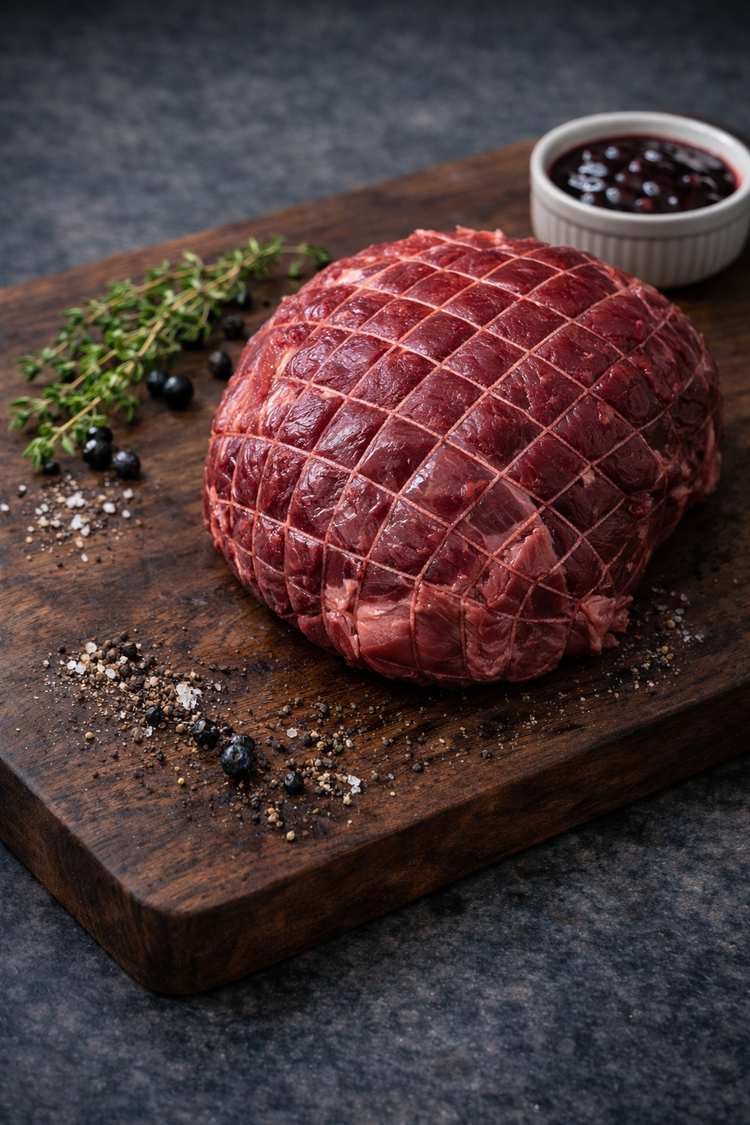
Elk Shoulder (4-5lbs)
Elk shoulder is the slow-cooking cut of the elk: a robust, deeply satisfying roast that turns fork-tender with time, ready to slice or pull. Each package contains one premium shoulder roast of about 4 to 5 lbs, bone-in or boneless, from 100% free-range elk. It is hand-selected for marbling, consistent quality and exceptional tenderness when slow-cooked, with a beautiful deep red color.
Why Elk Shoulder Is Made for Low and Slow
The shoulder works hard, so it carries more connective tissue than the loin or tenderloin. Given gentle heat and time, that tissue melts, and the natural intramuscular fat bastes the meat from within, delivering rich, juicy results from a naturally lean animal. The flavor stays mild and clean, which is why it pairs so well with bold seasonings, herbs and reductions. It is ideal for slow roasting, braising or smoking, whether for a family gathering or a batch of pulled elk for the week.
Roast Details
- Cut: Elk Meat shoulder roast, bone-in or boneless
- Package: 1 roast, approximately 4 to 5 lbs
- Raised: 100% free-range
- Character: Deep red, naturally marbled, mild and clean in flavor
- Best methods: Slow roasting, braising, smoking, slow cooker, Instant Pot
- Fits: Keto, paleo and carnivore eating
How to Cook Elk Shoulder
- Season and sear: Season generously with salt, pepper, garlic, rosemary and thyme, then sear all sides in a hot pan.
- Oven or slow cooker: Transfer to a low oven at 275 to 300°F, or a slow cooker, for 4 to 6 hours until fork-tender, about 195 to 205°F inside for a pull-apart texture.
- Braise for depth: Cook it in broth, red wine or bone broth with root vegetables.
- Instant Pot: Cut the roast into large chunks, sear, add 1 to 1.5 cups of broth and cook on high pressure for 90 minutes with a 20-minute natural release. If it is still firm, cook 10 more minutes.
- Rest: Let it rest 15 to 20 minutes before shredding or slicing.
Serve it as pulled elk tacos, hearty sandwiches or a classic roast with mashed potatoes and seasonal greens.
Nutrition
Elk is a powerhouse of lean, high-quality protein, naturally low in fat and calories. A typical 4 oz cooked serving provides approximately 25 to 30g of complete protein, only 4 to 6g of fat (mostly unsaturated), around 150 to 180 calories and zero carbs. It is rich in bioavailable iron (often 40 to 50% DV), zinc, B vitamins (especially B12, B6 and niacin), selenium and potassium, with significantly lower saturated fat and cholesterol than many red meats.
Free-Range Elk
Our elk are raised free-range in expansive, natural pastures across the northern Rocky Mountains and New Zealand valleys, grazing freely on diverse grasses, wild forage and native plants. They roam without confinement, feedlots or overcrowding, living natural, stress-free lives. Regenerative practices help preserve soil health, biodiversity and clean water while minimizing environmental impact.
Want to keep slow cooking? Try the Elk Osso Buco for a classic braise, or the Elk Ground for chili and tacos. Browse more in our Roasts & Slow Cook collection, or buy elk shoulder roast online right here.


Questions About This Product
In a 275 to 300°F oven or a slow cooker, plan on 4 to 6 hours. It is ready when it is fork-tender and the center reaches about 195 to 205°F for pulling.
Yes. Cut it into large chunks, sear, add 1 to 1.5 cups of broth and cook on high pressure for 90 minutes with a 20-minute natural release. If it is still firm, cook 10 more minutes.
It is one of the best cuts for it. Cooked low and slow to 195 to 205°F, the shoulder shreds easily for tacos, sandwiches and meal prep, with a mild, clean flavor that takes any seasoning.
No. Elk has a mild, clean flavor. Slow cooking with herbs, garlic, broth or red wine brings out its richness without any strong gamey edge.
Both are excellent slow-cooking roasts. Elk is milder and very lean, while wild boar is sweeter and nuttier. For a comparison, see the Wild Boar Shoulder.